Ayn Rand
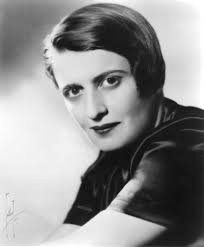
Ayn Rand (1905–1982) was a Russian-American novelist and philosopher famous for developing "Objectivism" and writing best-selling novels The Fountainhead (1943) and Atlas Shrugged(1957). She advocated for rational self-interest, laissez-faire capitalism, and individualism while strongly opposing altruism and collectivism. Her work remains highly influential, particularly among libertarians and conservatives.
Key Aspects of Ayn Rand
-
Philosophy (Objectivism): Rand described her philosophy as a "philosophy for living on earth," centered on the ideas that reality is objective, reason is the only means of knowledge, and the pursuit of one's own rational self-interest is the highest moral purpose.
-
Literary Work: Known for creating heroic, individualistic protagonists (like Howard Roark in The Fountainhead and John Galt in Atlas Shrugged) who refuse to conform to societal, altruistic pressures.
-
Background: Born Alissa Rosenbaum in St. Petersburg, Russia, she witnessed the confiscation of her father’s business by Bolsheviks, fostering a deep, lifelong resentment of communism. She immigrated to the U.S. in 1926, working in Hollywood before finding success as a writer.
-
Influence & Legacy: Despite her death in 1982, her books sell hundreds of thousands of copies annually. She is a polarizing figure, often cited as a major influence on modern libertarianism.
Key Beliefs
- Rational Egoism: She believed that selfishness is a virtue, and that individuals should exist for their own sake, not for the sake of others.
- Laissez-faire Capitalism: She advocated for a 100% free market, free from government intervention.
- Individual Rights: Her ethics focused on the protection of individual rights against collective, or state, power.
Her philosophy is often summarized as "the virtue of selfishness." Her works are widely read, yet she remains a controversial figure in political and philosophical discussions.